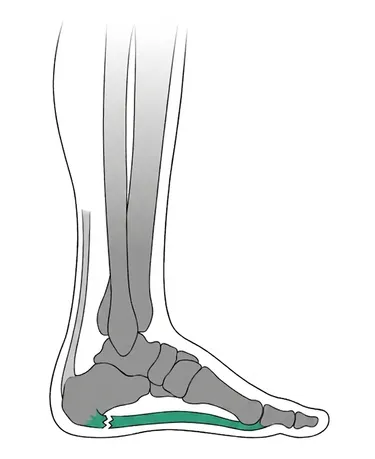
Stage 4 is about building volume and returning to the activities you care about — walking longer, jogging, or sport — without tipping the balance back into overload. Patience here protects everything you built in Stages 1–3.
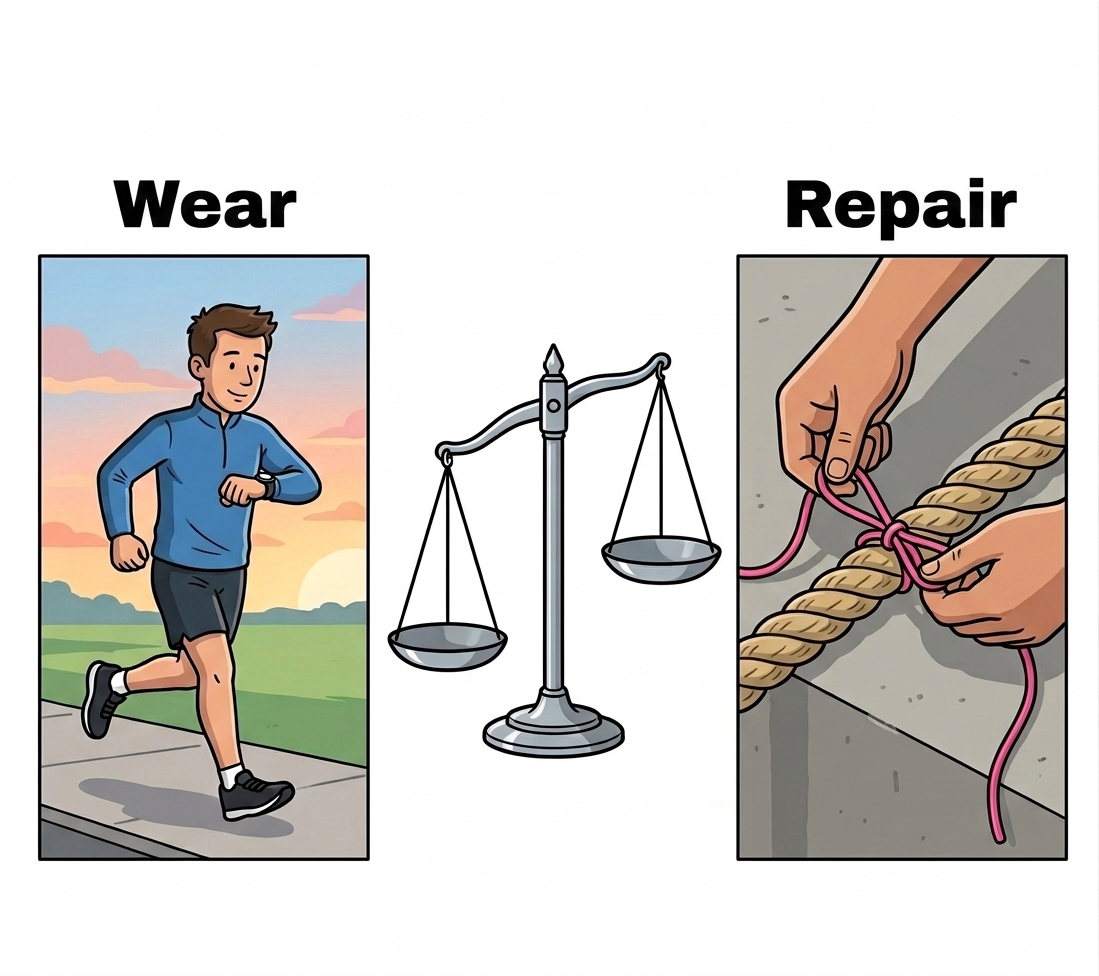
When to start Stage 4
Start when daily walking is comfortable, morning pain is mild and short-lived, and you can complete Stage 3 heel raises with good control and only mild post-exercise soreness. You should still expect some heel awareness — the test is whether symptoms recover within 24 hours after loading.
- First-step morning pain is manageable
- Single-leg heel raises completed without sharp heel pain
- No worsening trend over the past 1–2 weeks
- Stretching maintenance still happening several times per week
Walk before you run
If running was what triggered your symptoms, do not jump straight back in. Build walking tolerance first, then introduce short jog intervals on forgiving surfaces.
- Increase weekly step count or walk duration by no more than ~10% at a time.
- Avoid back-to-back hard days early on — alternate easier days.
- Keep supportive shoes; avoid racing in flat minimalist shoes too soon.
- Warm up with a slow toe stretch and 5 minutes of easy walking.
Walk–run progression
| Week | Session example | Frequency |
|---|---|---|
| Week 1 | Brisk walk 20–25 min, flat ground | 3× per week |
| Week 2 | Walk 25–30 min; add gentle hills if pain-free | 3× per week |
| Week 3 | Jog 1 min / walk 4 min × 4 repeats | 3× per week |
| Week 4 | Jog 2 min / walk 3 min × 4 repeats | 3× per week |
| Week 5 | Jog 3 min / walk 2 min × 4 repeats | 3× per week |
| Week 6 | Jog 5 min continuous × 2–3 bouts with walk breaks | 3× per week |
The 24-hour rule
Returning to sport
Court sports, jumping, and hill sprints load the heel aggressively. Wait until easy jogging feels solid, then reintroduce sport-specific drills gradually.
- Comfortable continuous jogging for 15–20 minutes.
- Heel raises and hopping on the spot without sharp pain.
- Sport-specific drills at half pace / half duration first.
- Full training only after 2–3 weeks of pain-free partial sessions.
Do not abandon maintenance
Many relapses happen because stretching stops as soon as sport resumes. Keep slant-board or calf stretching several times per week, plus supportive footwear when load increases.
Do
- •Progress one variable at a time (distance, speed, or frequency)
- •Keep heel raise strength work 1–2 times per week
- •Monitor morning first-step pain as your early warning sign
Don't
- •Jump from no running to a full 5k because you feel good one day
- •Train two hard days in a row in the first month back
- •Stop all stretching once symptoms ease
When to pull back
Need more detail on exercises?
Our exercises & return FAQ answers common questions about running, gym work, and knowing when you are doing too much. Stage 5 covers long-term maintenance when you are back to normal activity.