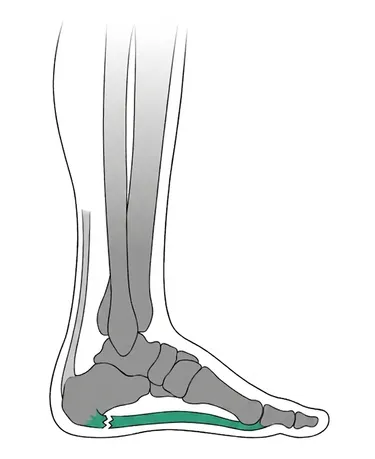
Stage 2 is about how much you load the heel — not abandoning the stretching and footwear habits from Stage 1. The goal is to tip the balance back toward healing by reducing aggravating load, then rebuilding gradually.
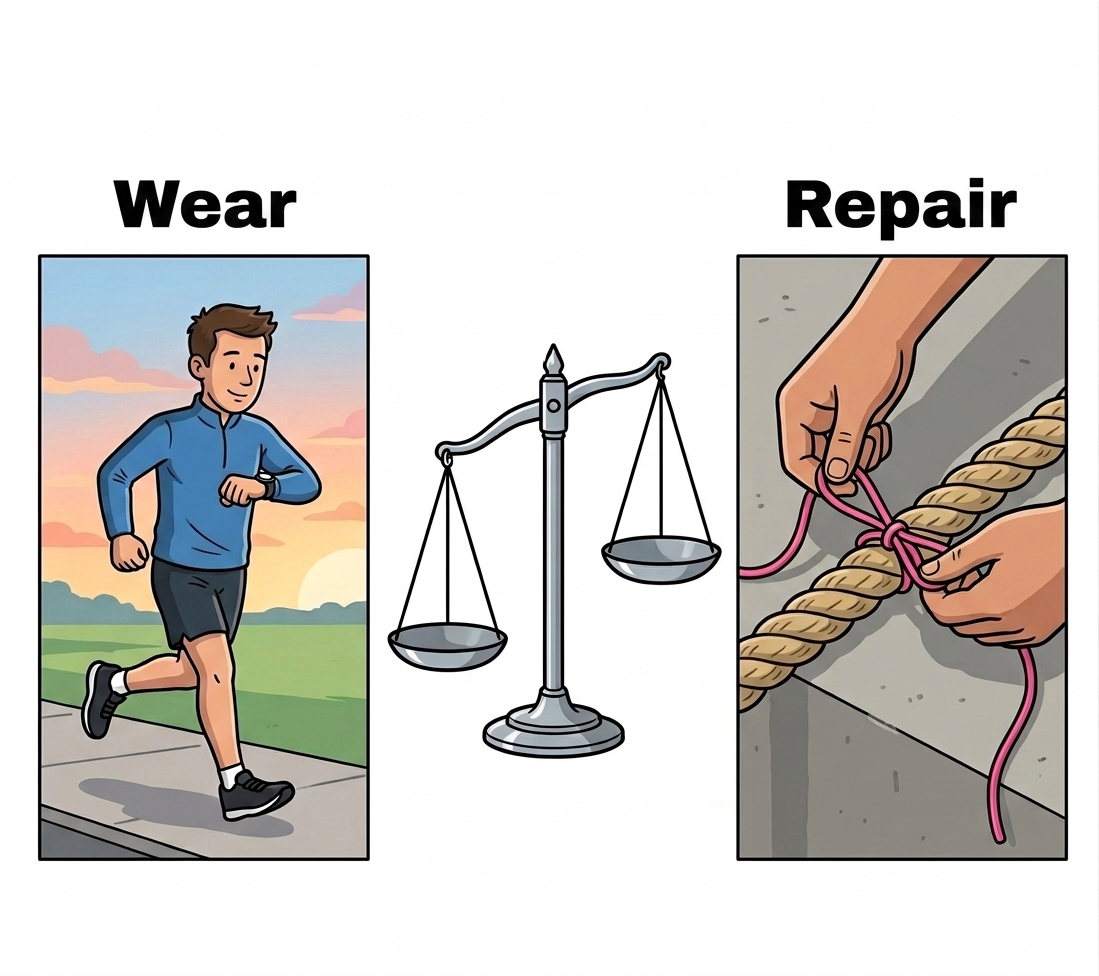
When to start Stage 2
You can work on loading at the same time as Stage 1 foundations — especially if pain is clearly linked to overuse. If symptoms are severe, settle the daily stretching routine first, then layer in activity changes. Do not wait for zero pain before you start being sensible about load; do wait until you have a simple daily programme you can repeat.
- Keep all Stage 1 habits going: stretching, supportive shoes, morning toe stretch.
- Add relative rest — reduce what provokes pain, not all movement.
- Judge progress in weeks, not day-to-day swings.
Relative rest (activity modification)
Complete rest is rarely the answer and often makes morning stiffness worse. Relative unloading means temporarily reducing activities that provoke heel pain — especially running — rather than stopping everything.
- If running flares symptoms, stop running completely for now rather than pushing through.
- Lower your daily step count for a few weeks.
- Use lifts or escalators instead of stairs where possible.
- Split longer walks into shorter bouts (for example, two 30-minute walks instead of one hour).
- Wear supportive footwear (with or without insoles) to reduce load through the heel.
The Four O's that slow recovery
Weight management (if relevant)
Even a modest reduction in body weight can meaningfully reduce force through the heel. Weight loss happens mostly through nutrition — exercise supports health, but intake control does most of the work. If this applies to you, treat it as part of Stage 2 loading, not a side project.
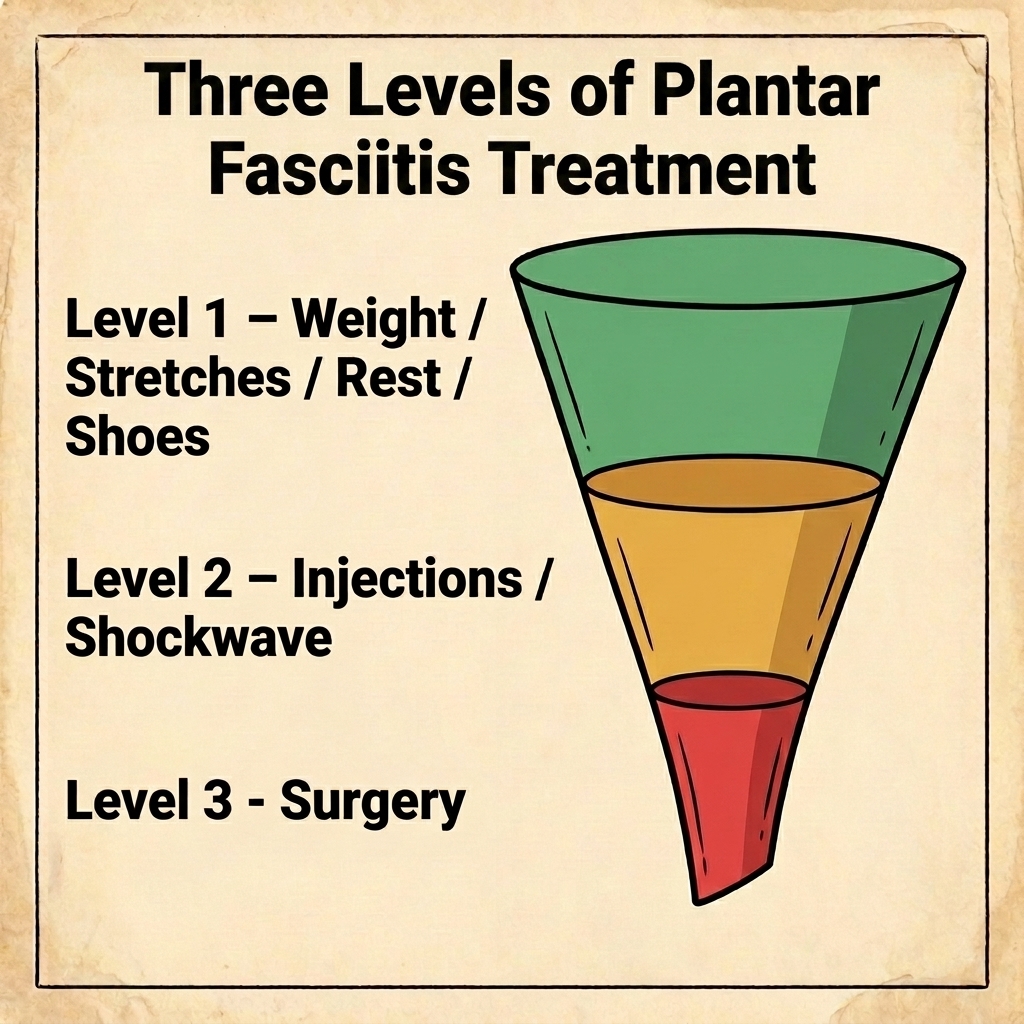
6-week loading progression
Use this as a framework alongside your Stage 1 stretching programme. Progress one variable at a time. If symptoms flare, hold your current step for longer before advancing.
| Week | Activity focus | Keep from Stage 1 |
|---|---|---|
| Week 1 | Cut aggravating activity; record baseline step count | Slant board, toe stretch, supportive shoes |
| Week 2 | Reduce steps by ~20%; avoid hills and long standing | Build stretching consistency |
| Week 3 | Hold current step count; split walks if needed | Continue slant-board progression |
| Week 4 | If pain is stable, allow a small step-count increase | Do not rush slant-board gradient |
| Week 5 | Reintroduce light activity only if morning pain is easing | Keep footwear and stretches non-negotiable |
| Week 6 | Consolidate tolerance; still no running unless pain-free walking | Review weight and step trends honestly |
When to pull back
Keep momentum
Like pushing a broken-down car, early progress can feel slow — but once improvement starts, it often gathers momentum. Small gains each week add up. Keep Stage 1 stretching going — Stage 2 does not replace it. For symptom recognition and when scans are worth discussing, see our diagnosis & symptoms FAQ. The plantar fasciitis course walks through the same stepwise approach in more detail.